
From Site Development to Site Partnership: Growing Communities for Change
A new cycle of the Center for Systems Awareness Site Partnership program is underway, led by Jane Drake and Gustav Böll, bringing together educators, leaders, and young people from a growing community of schools across North America and internationally.
The new name, Site Partnership, reflects something important about how this work has evolved. From the beginning, the intention was never simply to bring Compassionate Systems tools into schools. It was to cultivate the relationships, capabilities and conditions that enable communities to grow the work in ways that make sense in their own contexts and, over time, to lead it themselves.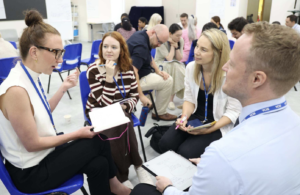
Just as importantly, sites have become a community for one another. As Helen, one of our participants, reflected:
“Being able to learn about schooling in all these different parts of the world, and just to know that the heart of an educator and the love of kids is really universal… I feel really inspired, and I’m just really grateful.”
That spirit of learning across contexts continues to shape the new cycle. Some sites are returning with greater local leadership, others are carrying the work forward independently, and new partners are bringing fresh experiences and questions into an increasingly international community.
The work at New Mexico School for the Deaf, initiated by Superintendent and Master Practitioner Jennifer Herbold, has grown into a committed core team leading the next phase of work, continuing its deep focus on inclusion, belonging, and opportunities for students and families to flourish.
At Burnt Ranch School District in California, the second cycle is placing young people firmly at the heart of the work. Superintendent Amanda Platt launched it last year with the whole school community. Building on that success, twenty-six students aged 12 to 16 joined this year’s launch, bringing wonderful energy and beginning the year as active participants in shaping what comes next.
In Ventura County, the evolution has gone even further. After several years of Site Development, championed by Lisa Salas-Brown and Ernesto Duran, a strong local community of Master Practitioners is now partnering directly with schools and creating wider learning opportunities for educators, administrators, students, and community members. The Center’s role is evolving too, supporting, co-designing, and co-facilitating alongside local practitioners who increasingly own and lead the work themselves. It is exciting to see what can grow when capacity is cultivated locally over time.
This year also brings new international partnerships.
At Upper Canada College in Toronto, 20 staff joined the launch as the school begins exploring how to cultivate a community that is increasingly systems aware and able to act within living systems towards a compassionate future. Their work connects with UCC’s participation in the IB Systems Transformation pilot and with the Master Practitioner journeys of Julia Kinnear and Jordan Small. One of their emerging inquiries asks an important question for many of us: How might we recognise meaningful growth while creating space for learning, emergence and adaptation, rather than relying solely on predetermined, linear measures of success?
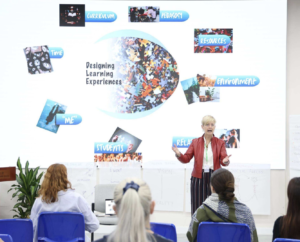 In Hong Kong, Yew Chung International School joins a thriving regional Compassionate Systems community. With Master Practitioner Julia Kortt, and other colleagues already growing the work within the school over the past years, there was a strong foundation for an energetic in-person launch involving staff from across the school community. Teachers are already adapting tools for their classrooms, while leaders are exploring deeper questions about trust, communication, relationships and what it means to lead in more generative ways.
Across all these contexts, the work looks different, as it should.
Our shared purpose is not to create identical Compassionate Systems schools. It is to develop communities that learn together, inquire into what matters in their own contexts, and build the capacity to carry the work forward. As sites become partners, practitioners become local leaders, and young people become active participants, the community continues to grow, not only in size, but in its capacity to learn from one another and lead change from within.
See list of all Articles